Construction daily report: what to include and a template
Claude ·
In short
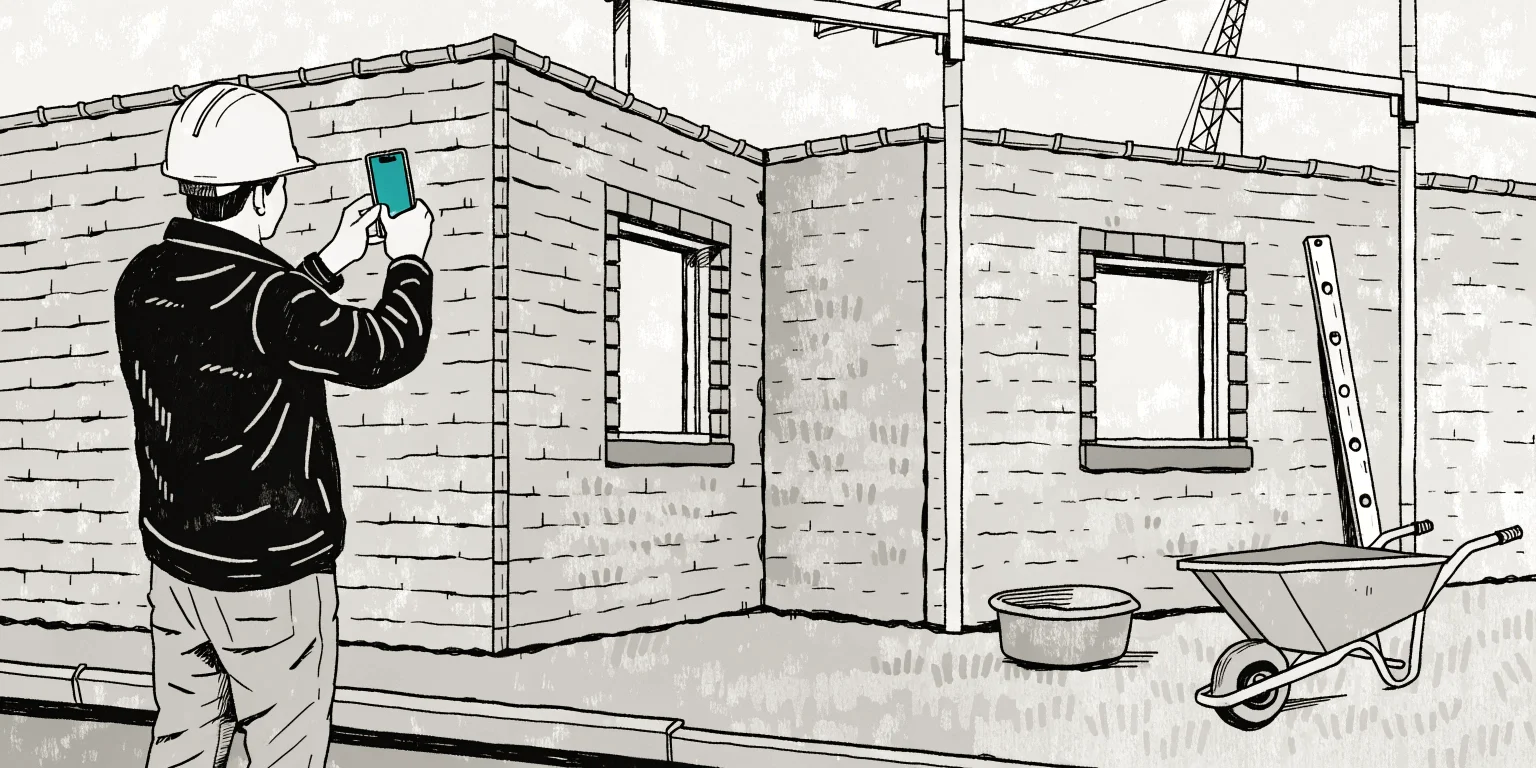
A construction daily report records one day on the job: the weather, who was on site and for how long, the work performed, equipment, deliveries, delays, instructions, visitors and photos, signed by the superintendent. On private jobs no federal law requires one; your contract decides. Military and VA construction contracts make it a deliverable due the next working day. And when a weather delay, a change or a dispute comes up, the report written that day is your best record of what happened.
What it's for
A daily report turns a day on site into a record that still holds up months later:
- Military and VA jobs. The quality control spec that USACE, NAVFAC and the Air Force use (UFGS 01 45 00) requires a production report "for each day that work is performed", signed by the project superintendent and due "by 10:00 AM the next working day". It adds: "Account for each calendar day throughout the life of the Contract." On VA jobs the superintendent submits a report for the preceding workday, and each one names "at least one safety topic germane to the jobsite that day" (VAAR 852.236-79).
- Weather and delays. Under the federal default clause for construction, "unusually severe weather" can excuse a delay, but only if you notify the contracting officer in writing "within 10 days from the beginning of any delay" (FAR 52.249-10). The daily report is your evidence of what the weather did and which work stopped. It isn't the notice itself.
- Changes and surprises. On federal jobs an oral instruction counts as a change order only if you give written notice stating "the date, circumstances, and source of the order", and costs from more than 20 days before that notice aren't paid (FAR 52.243-4). Differing site conditions need written notice "before the conditions are disturbed" (FAR 52.236-2). A report that records who said what, and when, makes that notice easy to write. Private contracts have notice clauses of their own: read yours.
Some of the content is required on any job: employers keep the "hours worked each workday" of nonexempt employees (29 CFR 516.2), and Davis-Bacon payrolls show the daily hours (29 CFR 5.5). The daily report backs these records up but doesn't replace them.
What goes in a daily report
- Job and date: the project and the day the report covers, which isn't always the day you send it.
- Weather: morning and afternoon, high and low temperature.
- Crew: how many people from your company and from each subcontractor, with trades and hours.
- Work performed: where, what and by whom, in the same terms as the schedule.
- Equipment: machines on site with hours used, idle or down.
- Deliveries: what arrived, how much, in what condition and where it's stored.
- Delays: the cause, the trades affected and the hours lost.
- Instructions and changes: who asked for what, and when.
- Visitors and inspections: name, company, purpose and result.
- Safety: the toolbox talk topic, inspections before work, any incident.
- Photos: progress, plus anything that's about to be covered up.
- Next steps for tomorrow.
- Signature of the superintendent who wrote it.
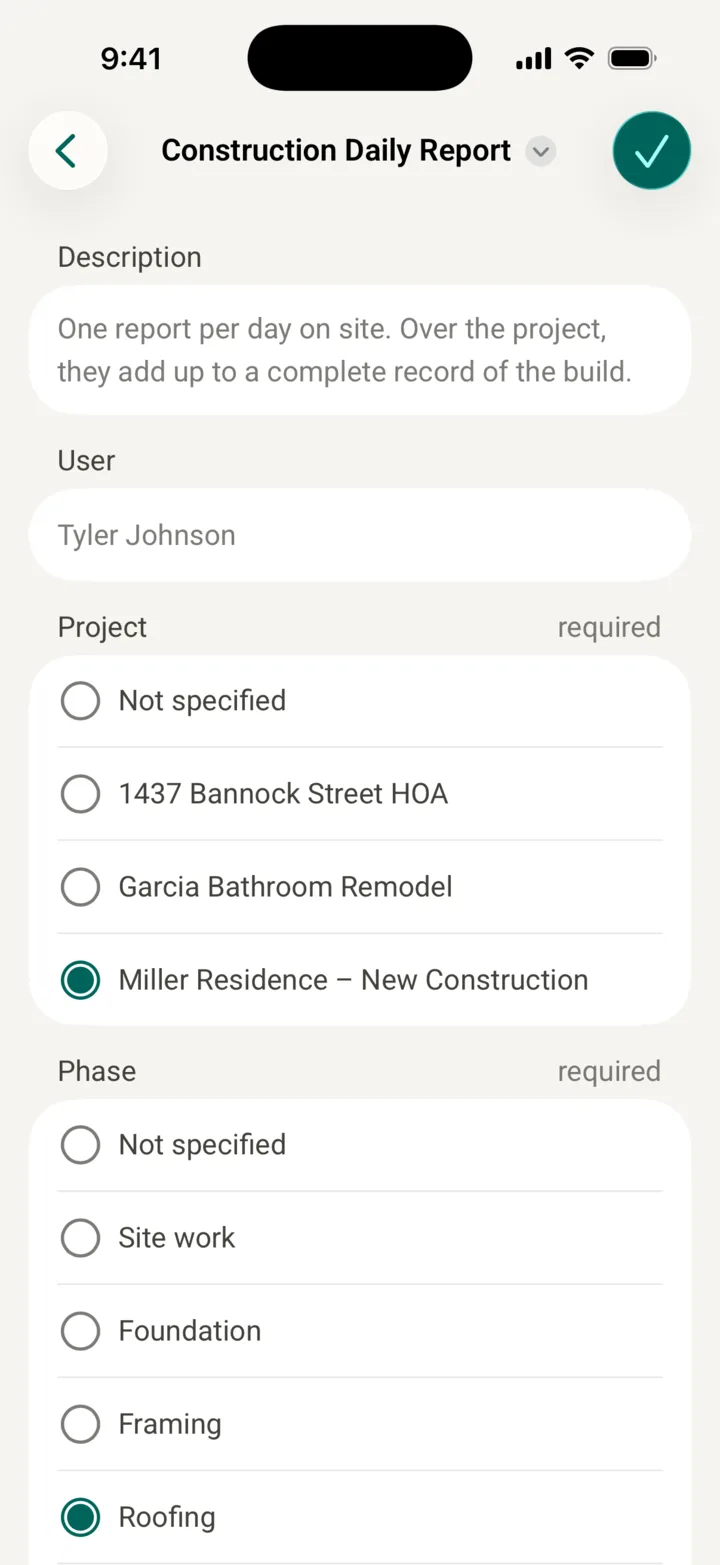
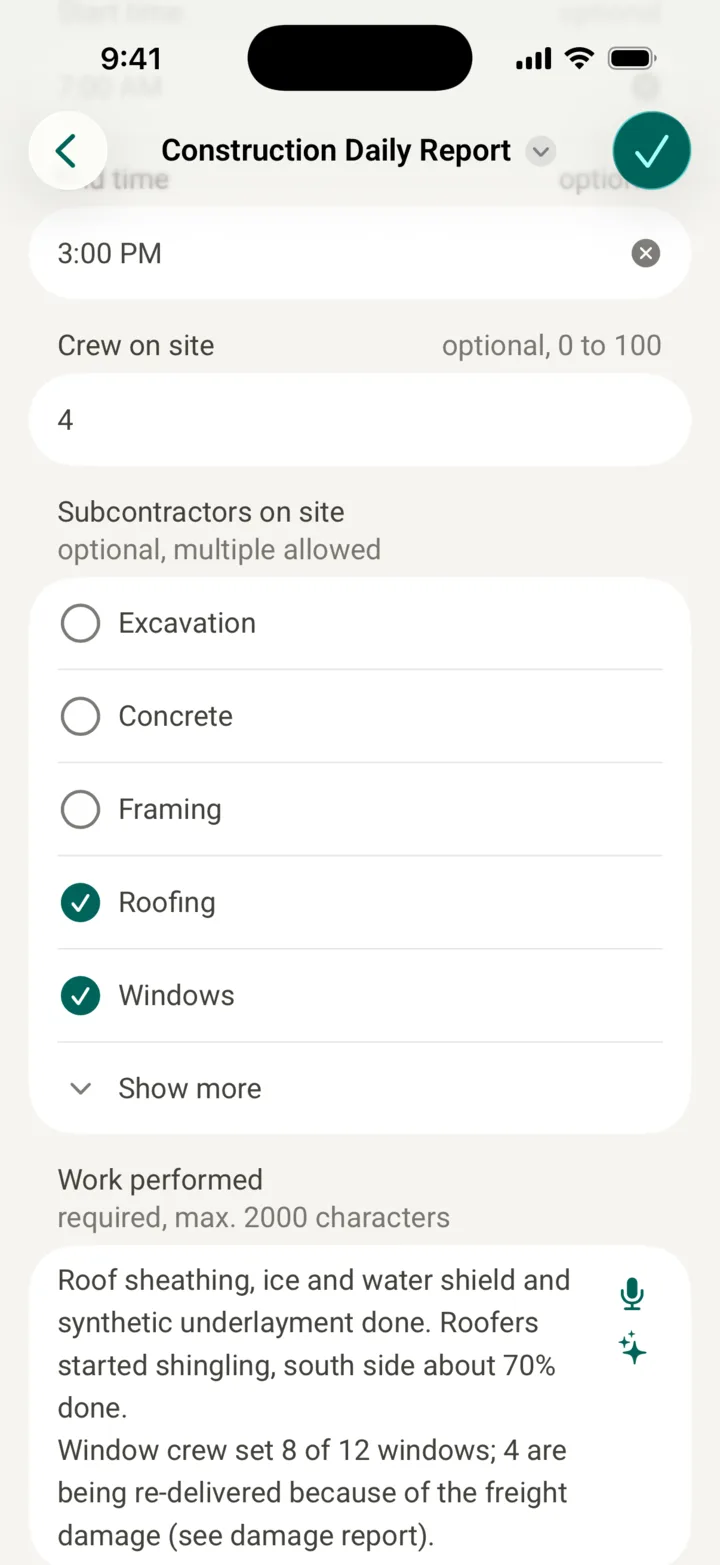
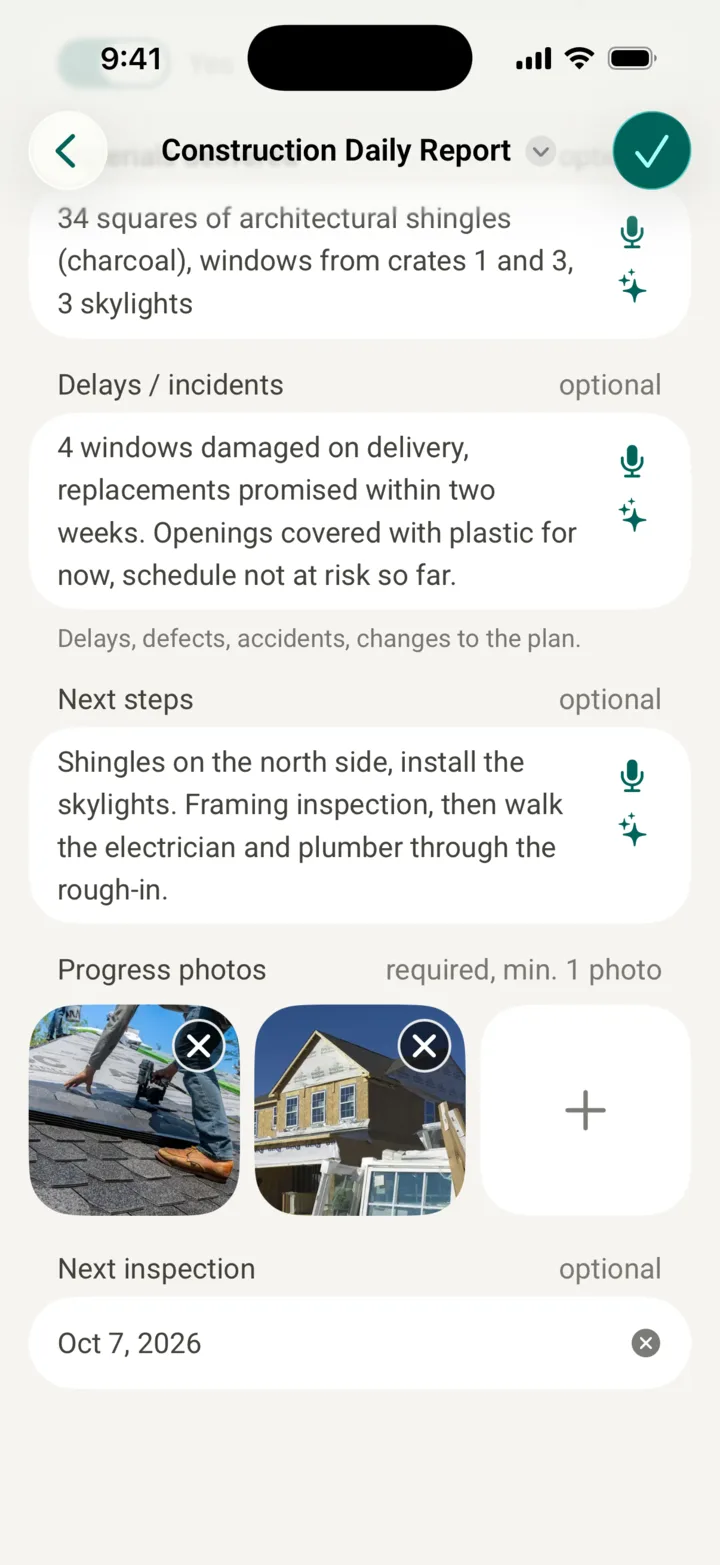
On site
- Write it the same day, on site. Courts accept a record "made at or near the time" by someone with knowledge as a business record (Federal Rule of Evidence 803(6)). Ten minutes before you leave beat an hour from memory on Friday.
- Start with weather and crew. Conditions in the morning and afternoon, then who's on site: your crew and each sub, with trades and hours.
- Describe the work by location. "Second floor, east side: walls 4 to 7 framed" says more than "framing". Use the names from your schedule.
- Log what got in the way. Rain, a late delivery, a missed inspection, an instruction from the owner: the time, the cause and who was affected. Then send the written notice your contract requires, separately.
- Take photos. Progress, problems and anything about to be covered up: the rough-in before drywall, the crack before it's patched.
- Sign and send. The superintendent signs, and the office has the PDF the same evening.
Three examples:
- Framing: it rains until 11, and the framing crew starts at noon. The report shows the morning's weather, four carpenters with five hours each, and three hours lost on the second-floor walls. When the schedule slips two weeks later, the reason is on record.
- Electrical: after rough-in, the homeowner asks the electrician to move three kitchen outlets. The report notes who asked, when and what, plus the extra hours, and the office sends a change order the next morning.
- Excavation: before work starts, the foreman inspects the trench, as OSHA requires daily and after every rainstorm (29 CFR 1926.651(k)(1)). The report notes the inspection, the result and a photo.
Common mistakes
- Writing it days later. Written from memory on Friday, it's weaker evidence, and the details are gone.
- Skipping days. No report on a rain day, and nobody can show it rained.
- Treating the report as notice. Contracts want written notice of delays and changes, and on federal jobs a delay notice is due within 10 days. A line in the daily report doesn't count.
- Opinions and blame. "Plumber was slow again" helps nobody. Write what you saw: who arrived when, what got finished and what didn't.
FAQ
Are daily reports required by law?
No federal law requires them on private jobs: your contract decides, and rules differ by state. Military and VA construction contracts require them (UFGS 01 45 00, VAAR 852.236-79). Some of the content is required anyway, such as the hours each nonexempt employee worked each workday (29 CFR 516.2).
Who writes and signs the daily report?
The superintendent or foreman who ran the day. On military jobs the project superintendent signs the production report and the QC manager the quality control report (UFGS 01 45 00). Subcontractors belong in it too: the spec says to "include in these records the work of subcontractors and suppliers".
Is a daily report a legal document?
It can be evidence. Under Federal Rule of Evidence 803(6), a record made at or near the time, as a regular practice of the business, can be admitted despite the rule against hearsay. State courts have their own rules, so ask a lawyer about a specific case.
Is a daily report the same as a T&M ticket?
No. The daily report covers the whole day on the job. A time-and-materials ticket records the labor, equipment and materials for extra work you bill by the hour, and the daily report holds the details it needs.
Can a spreadsheet or paper log do the job?
Yes, if each entry has the date, weather, work and photos together and old entries can't be changed unnoticed. Federal rules let contractors keep records in electronic form (FAR 4.703). On paper, the photos live somewhere else.
How long should I keep daily reports?
On federal contracts, records generally stay available for 3 years after final payment (FAR 4.703), and payroll records are kept for at least 3 years (29 CFR 516.5). For private jobs, check your contract and ask your lawyer or accountant.
Sources
- UFGS 01 45 00, Quality Control (August 2023, Change 3), Whole Building Design Guide, sections 1.12.1 to 1.12.3, read November 7, 2026
- 48 CFR 852.236-79, Contractor Production Report (VAAR), eCFR, read November 7, 2026
- FAR 52.249-10, Default (Fixed-Price Construction), Acquisition.gov, read November 7, 2026
- FAR 52.243-4, Changes, Acquisition.gov, read November 7, 2026
- FAR 52.236-2, Differing Site Conditions, Acquisition.gov, read November 7, 2026
- FAR 4.703, Policy (contractor records retention), Acquisition.gov, read November 7, 2026
- 29 CFR 516.2, records of employees subject to the minimum wage and overtime provisions, eCFR, read November 7, 2026
- 29 CFR 516.5, Records to be preserved 3 years, eCFR, read November 7, 2026
- 29 CFR 5.5, Contract provisions and related matters (Davis-Bacon), eCFR, read November 7, 2026
- 29 CFR 1926.651, Specific Excavation Requirements, eCFR, read November 7, 2026
- Federal Rule of Evidence 803, Exceptions to the Rule Against Hearsay, 28 U.S.C. Appendix, govinfo, read November 7, 2026