Damage report form for contractors: contents and template
Claude ·
In short
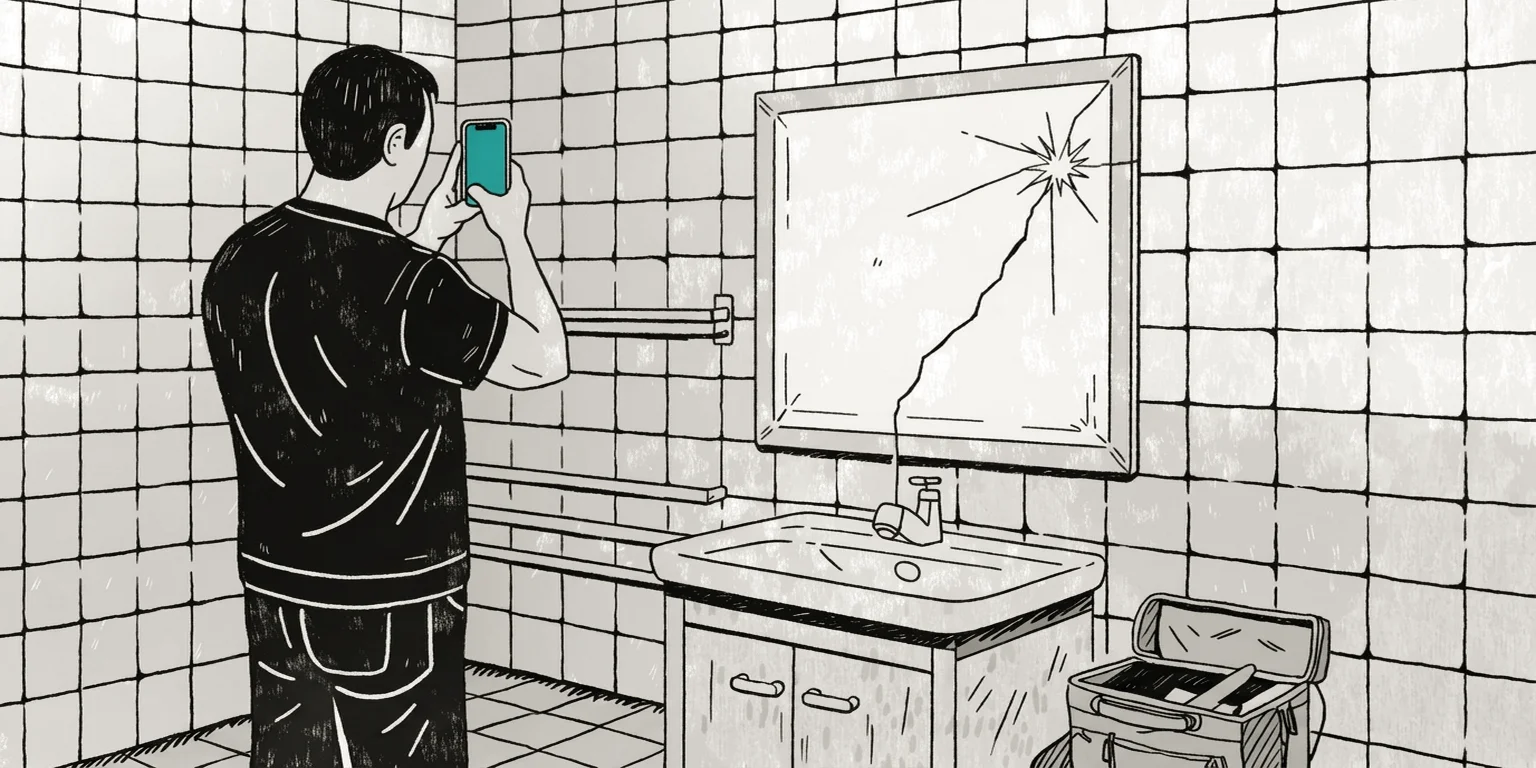
A damage report records what is damaged, where, since when and how badly: photos, measurements, the date and the customer's signature. Contractors need one in three situations above all: damage that was there before you started, damage your crew causes, and damage to your own work before the owner accepts it. No law prescribes the form, but your liability insurer wants to hear about anything that may turn into a claim "as soon as practicable", and without photos it's your word against the customer's.
What it's for
When you work in someone's home or on their building, you answer for what your crew breaks. Federal construction contracts put it plainly: the contractor is "responsible for all damages to persons or property that occur as a result of the Contractor's fault or negligence" (FAR 52.236-7). On private jobs your contract and state law decide, but the questions are the same: was it there before, what happened when, and who was there. The damage report answers them while the answers are still visible:
- Pre-existing damage. The chipped tub, the scratched hardwood, the water stain on the ceiling: anything that was there before you started goes on the report with a photo, and the customer signs. Otherwise there's no way to show after the job that it wasn't you.
- Damage your crew causes. A ladder gouges a window frame, a drill finds a supply line. This is what commercial general liability (CGL) insurance is for: in the words of California's Contractors State License Board, it "can protect against third-party bodily injury and accidental property damage." Your policy makes you report it promptly, and the report is what you send.
- Damage to your own work before acceptance. Until the owner accepts the job, your work may still be your risk. On federal jobs the same FAR clause makes the contractor responsible for "all materials delivered and work performed until completion and acceptance of the entire work." Check your contract for its version, and document damage to your work before the walkthrough, not after.
What goes on the form
- Customer, job address and work order number, with the floor and room, so anyone can find the spot and the report matches the job.
- When it was found: before work started, during the work, or at or after completion, with the date. This is the most important line on the form.
- Type of damage and what's affected: breakage, scratches, water, stains; floor, walls, windows, mechanical, contents.
- Description with dimensions and readings: how long the scratch is, how big the wet area, what the moisture meter says.
- What happened, if you know: facts only, no blame.
- Immediate actions: water shut off, breaker off, area covered, dehumidifiers set up.
- Estimated cost, if you can estimate it honestly.
- Damage photos and overview photos: close-ups with a tape measure for scale, plus the whole room so anyone can see where it is. Photograph your floor protection too.
- Insurance notified: yes or no, and on what date.
- Present on site: who was there, by name.
- Customer signature, confirming they've seen the condition as recorded.
On site
- Walk the job before you start. Go through the rooms you'll work in, and the path you'll carry material along, with the customer. Photograph and record anything already damaged, and get the signature before the tools come out.
- If something happens, make it safe first. Shut off the water, kill the breaker, cover it up. Then document.
- Photograph before anyone cleans up. Overview first, then close-ups. Keep damaged parts until the insurer has decided.
- Write down what you see: measurements, readings, what happened, the time, who was there. No blame, no promises.
- Get the signature and send it. The customer signs, and the customer and the office get the PDF right away.
- Notify. The office reports it to your insurer the way your policy requires. Damage other trades do to your work goes to the GC or the owner in writing.
Three examples:
- Bathroom remodel: on the walkthrough, the tile setter spots a chip in the enamel of the tub that's staying. A photo with a tape measure, one line on the report, the homeowner's signature. When the homeowner asks three weeks later whether that happened during tiling, the answer is in the office.
- Electrical: cutting into a wall for a new box, the electrician nicks a water line, shuts off the water, photographs the hole and the wet drywall, takes a moisture reading and notes the time and who was there. The office calls the insurer the same day.
- Windows: the day after install, a new pane has a scratch, and the drywall crew has been working in the room since. The installer records it with photos and sends the report to the GC before the walkthrough.
Common mistakes
- Documenting only once something happens. Without photos of the job before you started, it's your word against theirs, and every old scratch can be yours.
- Cleaning up before the photos. Sweep up the glass and mop the water before anyone takes a picture, and you've removed your own evidence.
- Admitting fault or promising to pay on the spot. "We'll take care of it" doesn't belong on the report. Record what you see and let your insurer sort out who owes what.
- Late notice. "As soon as practicable" doesn't mean the end of the job. Late reporting can get a claim denied, especially when the delay hurts the insurer's ability to handle it.
FAQ
Is a damage report required?
No law prescribes the form. What's required is notice: the standard general liability wording asks for notice "as soon as practicable" of an occurrence that may result in a claim, and your contract may add its own notice clause. A report written on site covers both.
Does the customer have to sign?
No. But their signature confirms they saw the condition you recorded, which is half the value of a pre-existing damage report. A signature on your phone counts too: under the federal E-SIGN Act, a signature "may not be denied legal effect, validity, or enforceability solely because it is in electronic form" (15 U.S.C. § 7001). If the customer won't sign, note that and who was there, and send the PDF anyway.
Does my general liability policy cover it?
Accidental damage to the customer's property is what CGL is for. Your own work is another matter: California's licensing board points out that CGL "is not intended to cover the work the contractor performs." What your policy covers and excludes is in the policy itself, so ask your agent before you need it.
What if we hit a buried line?
Make the site safe first. If it's a gas or hazardous liquid pipeline, federal rules require you to report the damage to the pipeline operator promptly, "whether or not a leak occurs" (49 CFR 196.107), and to call 911 if gas or liquid is released (49 CFR 196.109). For other utilities, check your state's 811 rules.
Sources
- FAR 52.236-7, Permits and Responsibilities, Acquisition.gov, read November 7, 2026
- 49 CFR 196.107, What must an excavator do if a pipeline is damaged by excavation activity?, eCFR, read November 7, 2026
- 49 CFR 196.109, What must an excavator do if damage to a pipeline from excavation activity causes a leak where product is released from the pipeline?, eCFR, read November 7, 2026
- Information About Commercial General Liability Insurance, Contractors State License Board, California, read November 7, 2026
- The Insured's Responsibilities in the Event of a Claim, Construction Executive (Associated Builders and Contractors), on the notice condition of the standard CGL policy form, read November 7, 2026
- 15 U.S.C. § 7001, General rule of validity (E-SIGN Act), Legal Information Institute, Cornell Law School, read November 7, 2026